Living in Mesa, Arizona, we all know how unforgiving those triple-digit summers can be. When the temperatures climb past 110°, your home air conditioning isn’t just a luxury—it’s what keeps your family safe and sane. But even the toughest air conditioners have their limits, and we’ve seen plenty of homeowners push theirs a little too far before realizing it’s time for AC replacement.
We’ve been helping families and businesses across the Valley stay comfortable for years, and honestly, spotting the warning signs early can save you a ton of headache (and money). No one wants to be stuck without cool air during a July heat wave, right?
So if you’ve been wondering whether your system is on its last legs, here are the five biggest red flags we see all the time.
Living here in Mesa, we’ve felt that brutal summer heat more than once
Out here the sun doesn’t mess around. Your AC runs practically nonstop from May through September, sometimes longer. That kind of workload wears equipment down faster than in milder climates. What might last 20 years up north often taps out closer to 12-15 here in the desert. It’s just the reality of Arizona living.
Sign #1: Your AC is getting up there in years
Most central air conditioners are built to last about 15-20 years with decent care, according to the U.S. Department of Energy.[1] Push past that mark—especially in Mesa’s intense heat—and you’re living on borrowed time.
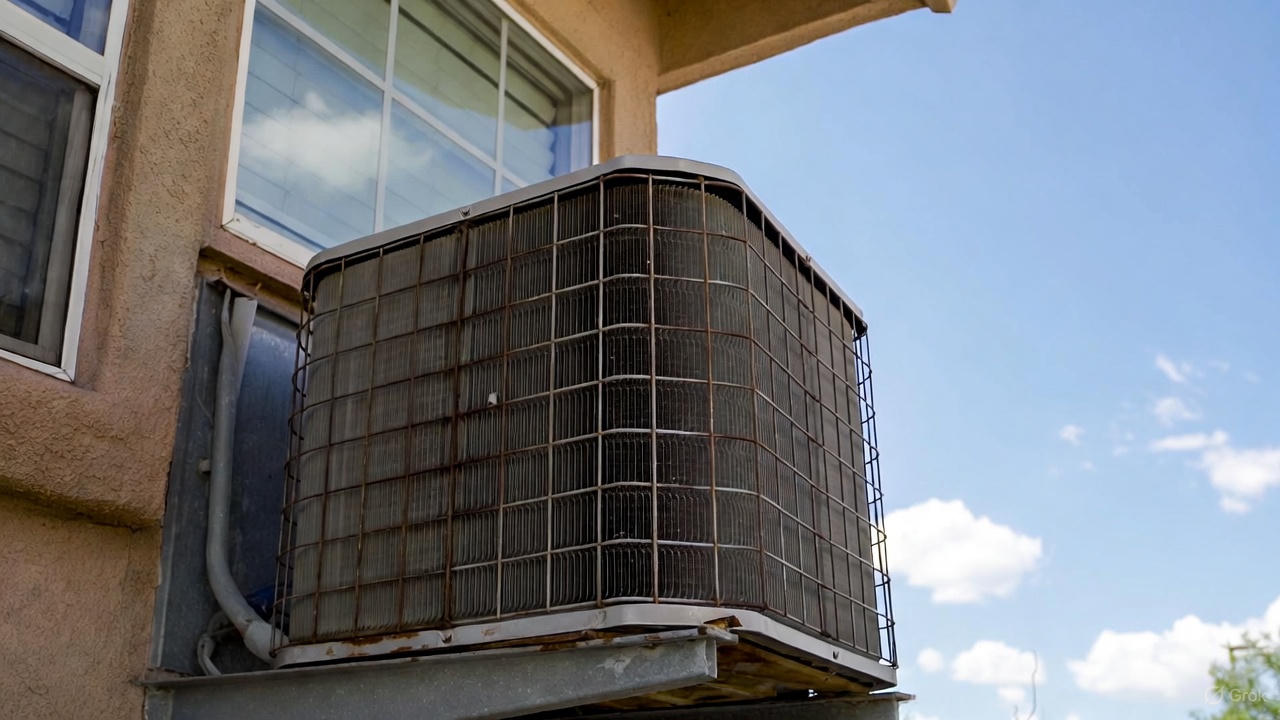
We often meet folks whose units are 18, 20, even 25 years old and they’re shocked when we tell them it’s actually impressive the system has hung on this long. Age alone doesn’t mean you have to replace it tomorrow, but combined with any of the other signs below? Yeah, it’s probably time to start planning.
Here’s a quick way to think about it:
- Under 10 years: Usually worth repairing
- 10-15 years: Gray area—depends on condition and repair costs
- Over 15 years: Start budgeting for replacement, even if it’s still limping along
Sign #2: The repair calls just won’t stop
You know the routine: one month it’s the capacitor, next it’s a refrigerant leak, then the fan motor acts up. If you’re calling for service two or three times a year, that’s not normal anymore.
There’s a handy rule of thumb we’ve used for years—if the repair cost is more than half what a new system would run, or if you’re dropping $500+ every summer just to keep it breathing, replacement almost always wins in the long run.
| Typical Repair | Average Cost (including labor) |
|---|---|
| Capacitor replacement | $150–$400 |
| Refrigerant leak repair + recharge | $250–$1,600 |
| Blower motor | $400–$900 |
| Compressor (the big one) | $1,500–$3,000 |
When those numbers start stacking up year after year, a new, warrantied system suddenly looks pretty reasonable.
Sign #3: Your energy bills keep climbing, even when usage feels the same
An older unit has to work harder to deliver the same cooling. Worn compressors, dirty coils, tired fans—all of it adds up. We’ve seen customers cut their summer bills by 30-50% after upgrading to a modern high-efficiency system.
New air conditioners today start at around 15 SEER2 (the updated efficiency rating) and go way up from there.[1] If yours was installed before 2010, it’s probably running at 10 SEER or less. That’s like driving a car that gets 15 miles per gallon when everyone else is getting 30+.
Honestly? Those higher bills are money flying out the window—money you could be putting toward the new equipment instead.
Sign #4: Some rooms feel like ovens while others are fine
Uneven cooling is frustrating. You crank the thermostat down, the living room finally feels decent, but the bedrooms are still stuffy—or freezing.
This usually means the system can’t move air properly anymore. Could be duct issues (common in older Mesa homes), but just as often it’s the equipment itself losing capacity. A new properly sized unit with variable-speed technology keeps every room comfortable without those wild swings.
Sign #5: Strange noises, smells, or dust that won’t go away
Grinding, banging, screeching—those aren’t normal AC sounds. They’re your system literally crying for help.
Same goes for musty odors (possible mold in the coils) or excessive dust blowing out (failing filters or blower). And if you’re seeing more allergy issues indoors than you’d expect, an aging system could be part of the problem.
Here’s the thing: even if you fix the immediate noise or smell, the underlying wear is still there. You’re treating symptoms, not the cause.
When repairs add up, replacement often makes more sense
We’ve been in enough attics and backyards around Mesa, Gilbert, Chandler, and Scottsdale to know this firsthand: once a system starts nickel-and-diming you, the math rarely favors keeping it alive much longer.
Think about it like an old car. You love it, it got you through a lot, but when the transmission goes and the AC quits and the check-engine light never turns off—sometimes it’s just time to move on.
Modern systems are quieter, smarter, and way more efficient. Many even qualify for rebates and tax credits that soften the upfront cost.
And for businesses? Downtime from a failed AC during peak season can cost thousands. We’ve helped plenty of local shops and offices avoid that nightmare with proactive upgrades.
What a new system really means for your wallet and comfort
Yes, AC replacement is an investment. But it’s also peace of mind knowing you’ll have reliable cooling when monsoon storms knock out power to half the Valley, or when we’re stuck in another 115° stretch.
Most of our customers tell us the same thing a few months after install: “I wish we’d done this sooner.”
Lower bills, fewer breakdowns, better air quality, and that fresh-system feeling—it’s hard to put a price on sleeping comfortably through an Arizona summer night.
Ready for cooler days ahead?
If a few of these signs sound familiar, don’t wait until you’re sweating through another breakdown. Give us a quick call at 480-207-1239 or schedule a no-pressure evaluation online. We’ll come out, take an honest look at your current setup, and lay out all your options—repair, upgrade, whatever makes the most sense for your home or business.
We’ve been keeping Mesa cool for years, and we’d love to help you breathe easier too.
Sources
- U.S. Department of Energy – Central Air Conditioning Overview and Lifespan Information energy.gov/energysaver/central-air-conditioning
- U.S. Environmental Protection Agency – Homeowner Guidance on HVAC Equipment Age and Efficiency epa.gov/ods-phaseout