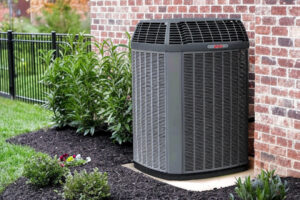
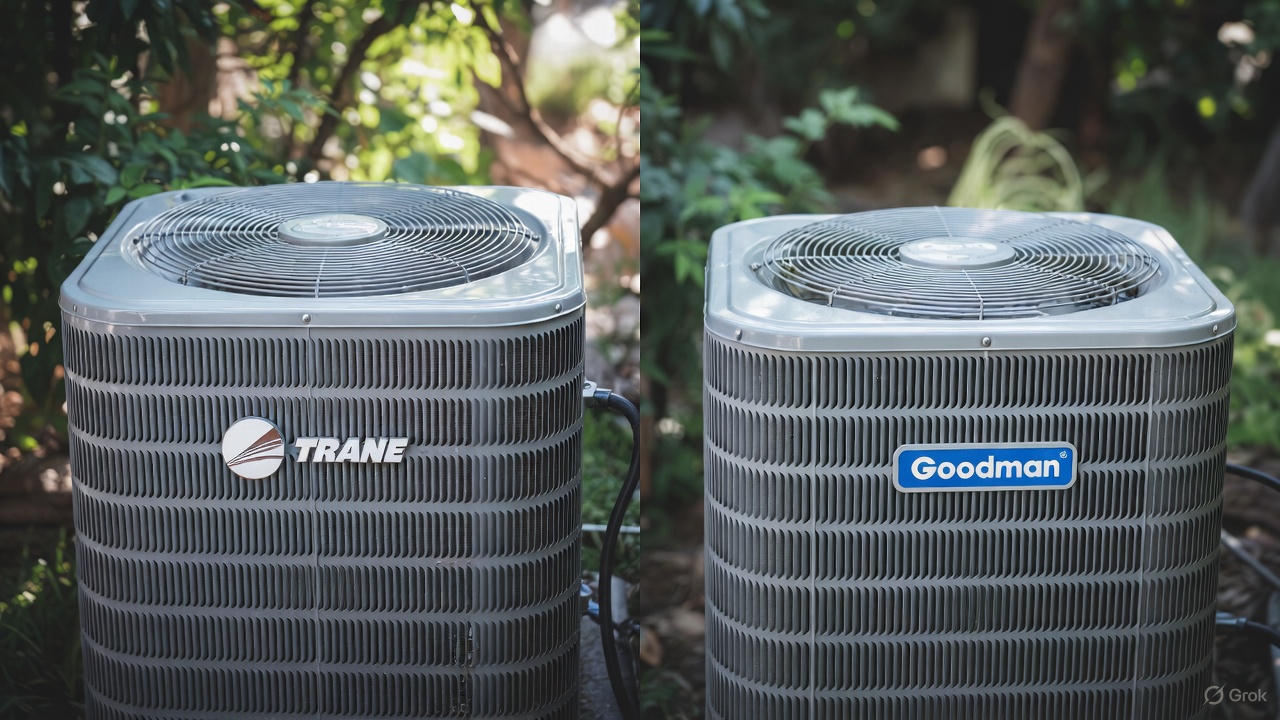
Trying to sort out whether Trane vs Goodman is better for your home can feel like homework you didn’t ask for. You just want an air conditioner that keeps you cool through Mesa summers, doesn’t explode your power bill, and won’t quit after a few years. As a local HVAC team that works with both brands every week, we’ll walk you through the trade-offs in simple, real-world terms.
Trane vs Goodman at a glance: quick comparison table
How to read this side-by-side breakdown
Before we get into the details, here’s a big-picture look at how Trane and Goodman stack up for typical Mesa homes and small businesses. This table won’t make the decision for you, but it’ll give you a clear gut feel for which column sounds more like you.
| Trane | Goodman |
|---|---|
| Premium reputation with strong build quality and rigorous testing; many models tested for weeks in extreme conditions to mimic years of use.[3] | Value-focused brand known for approachable pricing and generous warranties, especially on select high-efficiency models.[4] |
| SEER2 ratings typically span from the mid-14s up through the low-20s in premium variable-speed lines, ideal for hot climates like ours.[3][7] | Offers a wide range of models, usually emphasizing mid-range SEER2 with lower upfront cost and optional upgrades for higher efficiency. |
| Often chosen by homeowners planning to stay 10–15+ years who want quieter operation, better humidity control, and smoother temperature swings. | Often chosen for rentals, starter homes, or budget-sensitive projects where solid cooling and warranty protection matter more than advanced features. |
| Backed by strong compressor and parts warranties, plus a reputation for reliable long-term operation among many contractors and review sites.[3][6] | Stands out for 10-year parts coverage and, on select models, 10-year unit replacement and lifetime compressor warranties when registered.[4][5] |
| Generally higher installed price, offset by advanced comfort features and potential long-term energy savings for heavy AC users.[3] | Generally lower installed price, which can be a big win if you’re watching cash flow and mainly need reliable cold air. |
| Great fit when you want a “buy once, enjoy for a long time” system and care about fine-tuned comfort. | Great fit when you need dependable cooling, solid HVAC performance, and strong warranty protection at a friendlier price. |
Why this Trane vs Goodman decision really matters in Mesa heat
Our desert climate is brutal on air conditioners
Metro Phoenix is not gentle on air conditioners. Systems run for long stretches, roofs and yards bake in the sun, and dust storms blow fine grit through outdoor coils. That means the brand you choose—and how it’s installed—will be tested far harder here than in milder climates.
On top of that, newer SEER2 efficiency standards in the Southwest require minimum performance levels for split systems, typically 14.3 SEER2 or higher depending on size.[2] So whether you lean toward Trane or Goodman, you’re already shopping in a more efficient tier than many older systems still limping along in Mesa homes.
How needs differ for homes vs small businesses
A Mesa homeowner trying to keep a two-story house comfortable has different needs than a small retail shop or office along the 60. Homes often care most about bedrooms, noise, and monthly bills. Businesses tend to worry more about uptime, customer comfort, and how easily a system can be serviced without closing early.
That’s why we design systems a bit differently when we’re doing a straightforward residential AC installation versus a light commercial commercial HVAC project. Sometimes Trane is the smart move. Sometimes a well-applied Goodman setup fits the numbers better. The logo is only one piece of the puzzle.
Brand reputation and design philosophy
Trane’s durability-first approach
Trane has built its name on durability. Independent reviews note that Trane tests many models for roughly 16 weeks in extreme conditions to simulate about five years of wear and tear before they ever reach a home.[3] Other overviews of top AC brands consistently highlight Trane’s build quality and reliability as key reasons it stays near the top of “best of” lists.[6]
In our Mesa-area installs, that shows up in details like cabinet stiffness, coil protection, and how variable-speed models handle long, hot days without feeling strained. When someone tells us, “I just want something that feels like it will last,” they’re usually picturing a Trane or a similar premium system—even if they don’t know the brand names yet.
Goodman’s value and warranty-driven model
Goodman, by comparison, is famous for making central air conditioners that are easier on the upfront budget while still offering robust warranty coverage. Their official warranty materials explain that, with proper registration, many systems include 10-year parts coverage and, on select high-efficiency models, 10-year unit replacement and lifetime compressor warranties.[4][5]
Independent articles that rate air conditioners on value and warranty strength often mention Goodman as a strong pick when you want solid performance and protection without paying premium brand pricing.[8] Here in Mesa, that makes Goodman very attractive for rental properties, starter homes, and “we just need something reliable this year” situations.
Efficiency, SEER2 ratings, and your power bill
SEER2 basics for Arizona homeowners
SEER2 is the updated way we measure cooling efficiency—it’s like miles per gallon for your AC, but adjusted to match more realistic conditions with real ductwork and resistance.[1] The higher the SEER2, the more cooling you get per unit of electricity.
Trane explains that a 20 SEER2 unit can be roughly 43% more efficient than a 14 SEER2 system, especially if it runs for long periods in hot climates.[9] ENERGY STAR’s 2025 tax credit rules now require split systems to hit at least 17.0 SEER2 to qualify for certain federal incentives, which gives you a sense of what “high efficiency” means in official terms.[10]
How Trane and Goodman usually compare on efficiency
Trane’s current AC lineup typically ranges from about 14.8 SEER2 in base models all the way up into the low-20s in premium variable-speed systems designed for hot, high-use regions.[3][7] Those top-tier units can modulate capacity between roughly 30–100%, which lets them run longer at low speed for better comfort and energy control.[9]
Goodman’s catalog includes efficient models as well, but most homeowners encounter their mid-range SEER2 units that balance reasonable efficiency with lower upfront cost. Select high-efficiency Goodman units can qualify for ENERGY STAR and advanced incentives, especially when SEER2 ratings reach the mid-teens or higher.[11]
| Efficiency Question | How it plays for Trane vs Goodman |
|---|---|
| “We run the AC almost all day in summer.” | Leaning toward a higher-SEER2 Trane or similar premium variable-speed system usually makes sense for long-term savings. |
| “Our home is smaller and we keep temps around 78–80°F.” | A mid-tier Goodman or mid-range Trane can be enough; the jump to ultra-high SEER2 may take longer to pay back. |
| “We want to chase every rebate and credit we can.” | We’ll look at specific Trane and Goodman models that meet current ENERGY STAR and tax-credit thresholds, then compare numbers. |
Comfort, noise, and everyday performance
Temperature stability and humidity control
Comfort is where the day-to-day difference between basic and premium systems really shows up. Variable-speed and multi-stage Trane systems can run at lower speeds for longer periods, which smooths out temperature swings and pulls more moisture from the air.[12] Third-party reviews point out that these high-end models often excel in climates that demand precise humidity and temperature control—exactly what we deal with in July and August around Mesa.[7]
Goodman’s lineup includes single-stage, two-stage, and some variable-capacity options as well. In practice, a mid-range Goodman can feel very comfortable when it’s sized correctly and paired with good ductwork. It’s just that the most advanced comfort features usually show up first and most prominently in premium lines like Trane’s TruComfort-style systems.
| Comfort Factor | Trane vs Goodman in real life |
|---|---|
| Temperature swings | Premium Trane systems often keep rooms closer to setpoint with fewer “too hot / too cold” moments than basic single-stage gear. |
| Humidity on monsoon days | Longer, low-speed cycles on variable-speed units (usually premium lines) tend to remove moisture more effectively. |
| Fixing hot rooms | More about design—ducts, vents, and sizing—than the brand, though advanced controls give us extra tools. |
Noise levels and equipment placement
Noise isn’t always something people think about until it’s a problem. Many Trane condensers are engineered with specific fan blade shapes and cabinet designs that cut down on sound levels, which matters if the unit sits outside a bedroom, nursery, or home office.[3]
Goodman systems can be reasonably quiet too, especially newer, better-insulated models. But their basic single-stage outdoor units are usually a bit louder than premium variable-speed condensers. During a quote, we’ll look at where your equipment sits today and talk honestly about noise so you’re not surprised on that first hot night.
Reliability, lifespan, and warranty coverage
How long these systems typically last here
Most central air conditioners in our climate run somewhere around 12–18 years with good care. Trane’s reputation for longevity comes from both its testing regime and its track record—many reviewers and contractors call out Trane’s combination of strong components and long-term performance.[6][3]
Goodman systems often sit a little lower on the typical lifespan curve, but careful installation and regular maintenance can significantly close the gap. For many homeowners, the key question isn’t “Will this last forever?” but “Will this last through the years I actually plan to stay here?” When the answer is under 10–12 years, Goodman becomes a more compelling choice.
What Goodman and Trane warranties actually promise
Here’s where Goodman really leans in. The official documentation explains that, with online registration, many Goodman systems include:
- 10-year limited parts warranty on major components.
- 10-year unit replacement warranty on select models if key parts fail early.
- Lifetime compressor warranty on certain high-efficiency equipment for the original owner.[4][5]
Trane also offers long parts and compressor warranties, and some reviews note coverage stretching to around 12 years on compressors in certain product lines, paired with 10-year parts coverage on many systems.[3] On paper, the differences can look subtle, but the main point is this: having a local contractor who registers the equipment properly, keeps records, and helps you submit claims matters as much as the fine print itself.
If you want a truly low-stress experience with either brand, pairing your system with our Comfort Club maintenance plan is a smart move. It keeps your AC, heaters, and even your furnace serviced on schedule and helps protect your warranty coverage.
Price vs long-term value: when each brand makes sense
Real-world examples around Mesa and Gilbert
We can talk theory all day, but it helps to see how this plays out in real homes. Here are a few common scenarios we see around Mesa, Gilbert, and nearby cities:
- Long-term family home in Mesa: You’re planning to stay put, run the AC hard, and you care a lot about comfort and quiet. A higher-end Trane or similar premium system often makes sense here, especially if we size it correctly and pair it with a quality thermostat.
- Starter home or condo in Gilbert: You might move in 5–7 years and just need trustworthy HVAC without overspending. A properly installed Goodman with good SEER2 and strong warranty coverage can be a very sensible choice.
- Rental property in east Mesa: Tenants want cold air; you need predictable costs. A value-focused Goodman system plus our cooling maintenance services usually hits the sweet spot.
- Remote working couple in Queen Creek: Home all day, sound sensitive, and willing to invest once. Premium variable-speed systems (often Trane) routinely win here because of their comfort and noise profile.
Special notes for landlords and small business owners
If you own a small strip-mall unit, salon, or office, reliability and speed of service matter just as much as efficiency. In many light commercial spaces, it’s easier to justify a slightly higher-end system because downtime directly affects revenue. At the same time, you’ll still see Goodmans tucked above ceilings in many businesses because the numbers work.
When we quote replacements on commercial or mixed-use properties, we’ll usually lay out at least one “value” and one “premium” scenario, showing how both Trane and Goodman might fit alongside our repair services and commercial HVAC options. The goal is to give you clear, side-by-side choices, not a single one-size-fits-all answer.
AC, heaters, furnaces, and heat pumps working together
Matching your air conditioner with the right furnace
Most Mesa homes don’t just have an AC—they have a matched system: outdoor condenser plus indoor furnace or air handler. Both Trane and Goodman build equipment that pairs with gas furnaces, and both can be matched with compatible coils and blowers to deliver the capacity and airflow your home needs.
When your existing furnace is old or has recurring issues, it’s usually smart to handle everything at once. That lets us design a complete system that heats and cools efficiently instead of patching mismatched pieces. If you’re at that point, we’ll walk you through options using our furnace installation services, making sure your heater and AC complement each other.
When a heat pump is the smarter move
Because Maricopa County winters are relatively mild, heat pumps can be a great fit. Modern heat pumps from Trane and Goodman are designed to both cool and heat, and many meet or exceed new SEER2 and HSPF2 standards for efficiency.[13][11]
If you’re replacing a very old gas furnace and you’re open to changes, we can compare a traditional AC + furnace setup with a high-efficiency heat pump system. Sometimes the winner is obvious once you see the energy use, your utility rates, and how you actually use heating during our short winter season.
How we help you choose the right system (not just a brand)
What happens during a Comfort Experts visit
We don’t just glance at your square footage and toss out a number. A typical replacement visit includes looking at your existing equipment, checking ducts and return air, talking about problem rooms, and asking how you actually use your HVAC system. Then we size the system based on real load conditions instead of guesswork.
From there, we’ll usually present a few options that might include both Trane and Goodman, plus notes on efficiency, comfort features, and estimated long-term costs. If you like, we can fold our Comfort Club into the conversation so you know what maintenance will look like over the years.
Why design and installation beat logo loyalty
Here’s the honest truth: a perfectly installed Goodman will almost always beat a poorly installed premium system. Correct refrigerant charge, proper airflow, duct sealing, and smart thermostat settings are where most comfort problems are solved—or created.
That’s why we focus on the total package instead of pushing you toward one brand. Whether we end up installing a premium Trane system or a budget-friendly Goodman, we treat the design and installation with the same level of care you’d expect from a company that built its reputation on honest work and long-term relationships.
Simple checklist: which way you’re leaning
Quick questions to ask yourself before you buy
Still not sure which column in that first table fits you better? Ask yourself a few quick questions:
- How long will we stay here? Shorter stays make a lower upfront price more appealing; longer stays favor higher efficiency and comfort.
- How low do we set the thermostat in summer? The colder you like it, the more you benefit from premium efficiency and variable-speed comfort.
- How sensitive are we to noise? If loud condenser starts drive you crazy, quieter premium systems start to look pretty attractive.
- Is this our family home, rental, or place of business? Each one has different risk, cash-flow, and comfort priorities.
Your next step with Comfort Experts
You don’t need to memorize SEER2 charts or warranty fine print—that’s our job. What helps most is a walk-through of your home or business, a clear look at your goals, and transparent options that show exactly how Trane vs Goodman would perform for you.
If you’re ready to talk it through with a local team that services all makes and models, we’d be happy to help. You can schedule a visit or free replacement estimate right here: schedule service with Comfort Experts, and we’ll help you choose an air conditioner, heater, or complete system that actually fits your life—not just a brand chart.
Sources
- Trane – “What is SEER?” glossary explaining SEER2 as an updated efficiency metric similar to miles per gallon for AC systems: https://www.trane.com/residential/en/resources/glossary/what-is-seer/
- SEER2.com – Southwest region SEER2 minimum standards for split systems and heat pumps: https://seer2.com/region-southwest.html
- This Old House – Trane air conditioner review detailing SEER2 range, testing regimen, and typical installed costs: https://www.thisoldhouse.com/heating-cooling/trane-ac-review
- Goodman Manufacturing – Official air conditioner limited warranty registration page outlining 10-year parts, unit replacement, and lifetime compressor coverage on select models: https://www.goodmanmfg.com/resources/hvac-learning-center/warranty/the-air-conditioner-limited-warranty—the-why-when-how
- Ambassador HVAC – Summary of Goodman warranty coverage (10-year parts, 10-year unit replacement, lifetime compressor and heat exchanger with registration): https://www.ambassadorhvac.com/warranty-coverage-goodman/
- Modernize – “Best Air Conditioner Brands” ranking Trane highly for build quality, warranty support, and reliability: https://modernize.com/hvac/best-air-conditioner-brands
- NTI Now – “7 Best Home Air Conditioners of 2025” highlighting Trane’s variable-speed models and SEER2 ranges for hot climates: https://ntinow.edu/7-best-home-air-conditioners-of-2025-expert-tests-real-results/
- HVAC.com – Overview of Goodman HVAC warranties and value positioning for homeowners: https://www.hvac.com/expert-advice/goodman-hvac-warranty/
- Trane – “What’s a Good SEER Rating?” blog explaining efficiency gains between 14 SEER2 and 20 SEER2 and variable-speed comfort benefits: https://www.trane.com/residential/en/resources/blog/whats-good-seer-rating/
- ENERGY STAR – Federal tax credit criteria for central air conditioners effective 2025 (SEER2 and EER2 thresholds): https://www.energystar.gov/about/federal-tax-credits/central-air-conditioners
- ENERGY STAR / product criteria – Key SEER2 and EER2 benchmarks for high-efficiency central AC and heat pump systems: https://www.energystar.gov/products/heat_pump_water_heaters/key-product-criteria
- Trane – Residential air conditioner brochure explaining variable-speed comfort benefits (humidity, sound, and efficiency): https://www.trane.com/residential/en/assets/product-brochures/TT_72-1208-L-42_TR_AC%20ConsBrochure_SV.pdf
- Trane – Heat pump product page with SEER2 and HSPF2 efficiency ranges and noise levels: https://www.trane.com/residential/en/products/heat-pumps/
- HVAC.com – Goodman AC cost overview discussing price ranges and value positioning: https://www.hvac.com/expert-advice/goodman-air-conditioner-cost/